In this article
A person may be able to reach a deep position during a floor stretch and still struggle to control a similar range while stepping, lifting, or changing direction. Another person may feel generally “tight” yet have all the range required for daily life and sport. These are different problems, and they should not receive the same program.
That is why mobility and flexibility are useful to separate, even though the terms are not defined consistently across every research paper or coaching system.
Flexibility commonly describes the range available at a joint or across a muscle group, often measured in a passive or standardized test. Mobility is a broader coaching term: can you access and organize the range a real task requires, with enough strength, coordination, and control to use it?
The distinction is practical rather than semantic. Range matters, but more range is not automatically better. The useful amount depends on the person and the activity.
Stretching works, but it solves a specific problem
Static stretching can improve range of motion. A 2025 systematic review and meta-analysis included 189 studies and 6,654 adults and found positive effects from both a single session and longer-term static-stretching programs. The authors also reported that people starting with lower flexibility tended to improve more.
That makes stretching a valid tool when additional range is the actual objective. It can be simple, inexpensive, and easy to perform outside a full training session.
What stretching does not do is answer every question hidden inside the word mobility. A larger passive range does not by itself establish strength near the end of that range, control while the body is moving, tolerance under load, or transfer to a specific task.
A 2025 expert consensus statement reached a similarly measured conclusion. Stretching can improve range of motion and reduce muscle stiffness, but it should not be presented as a complete injury-prevention strategy, a reliable posture correction, or an acute recovery method after exercise. The intended outcome matters.
Strength training can improve range too
The familiar choice between strength and flexibility is often false. Resistance training performed through an appropriate range can improve both force capacity and joint range of motion.
A 2025 systematic review of 36 studies involving 1,469 healthy adults found that resistance training improved flexibility overall. The authors also reported substantial variation between studies and no included paper at low risk of bias, so the result should not be treated as a universal prescription. It does show that loaded movement and flexibility are compatible.
A separate 2024 randomized trial compared full-range resistance training with static stretching in healthy, physically active adults. Both approaches improved the tested sit-and-reach measure, while the resistance-training group also improved hip and lower-back extensor strength more than stretching or control conditions.
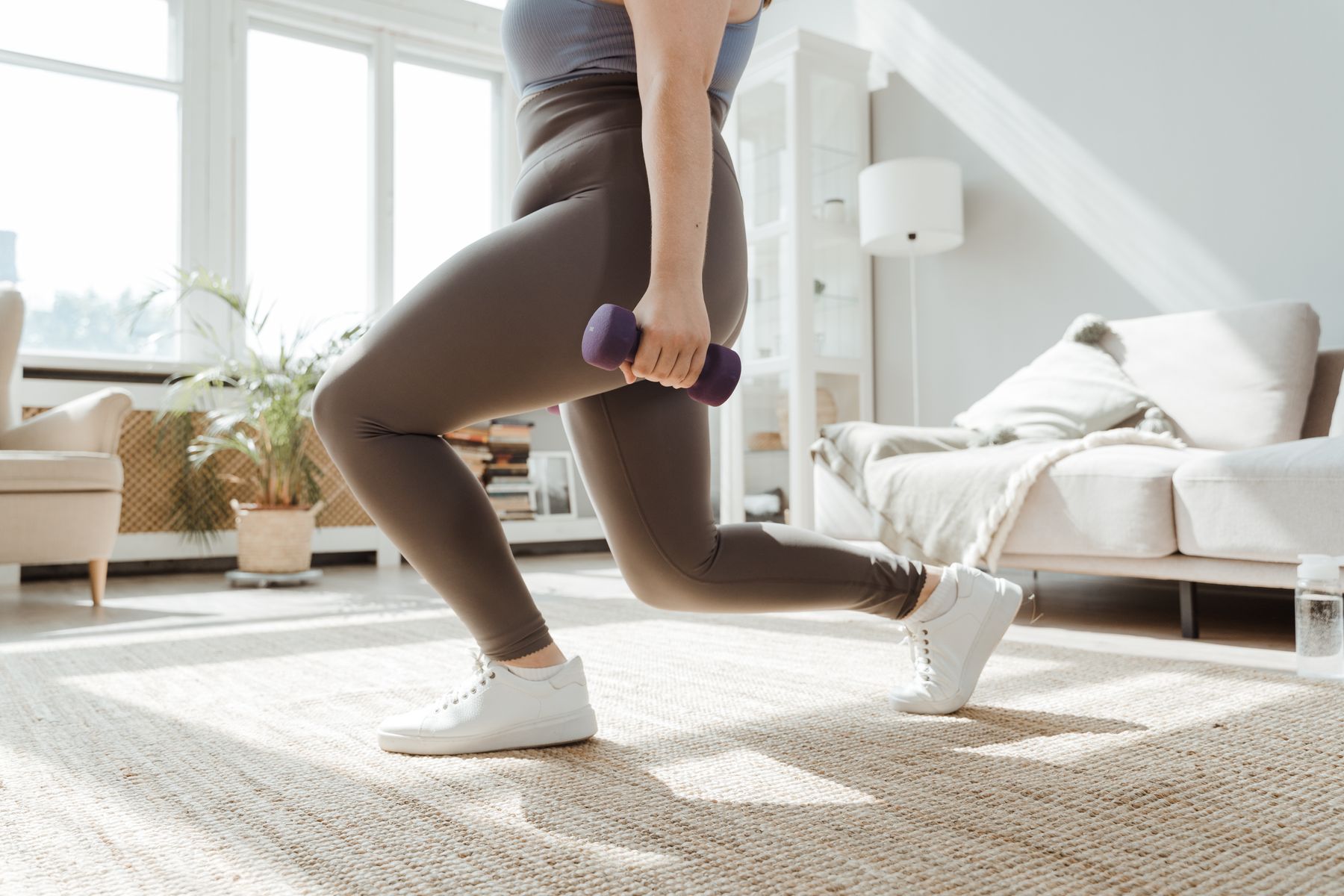
The useful conclusion is not that stretching has become unnecessary. It is that a well-designed strength exercise can train more than one quality at a time. For a time-limited client, a controlled split squat, hinge, calf raise, pulldown, or press may develop strength while also exposing the body to useful range.
Usable range is task-specific
A range-of-motion test tells you something about the test. It does not automatically tell you how a person will serve in tennis, reach an overhead cabinet, sit comfortably on the floor, or control a step down from a curb.
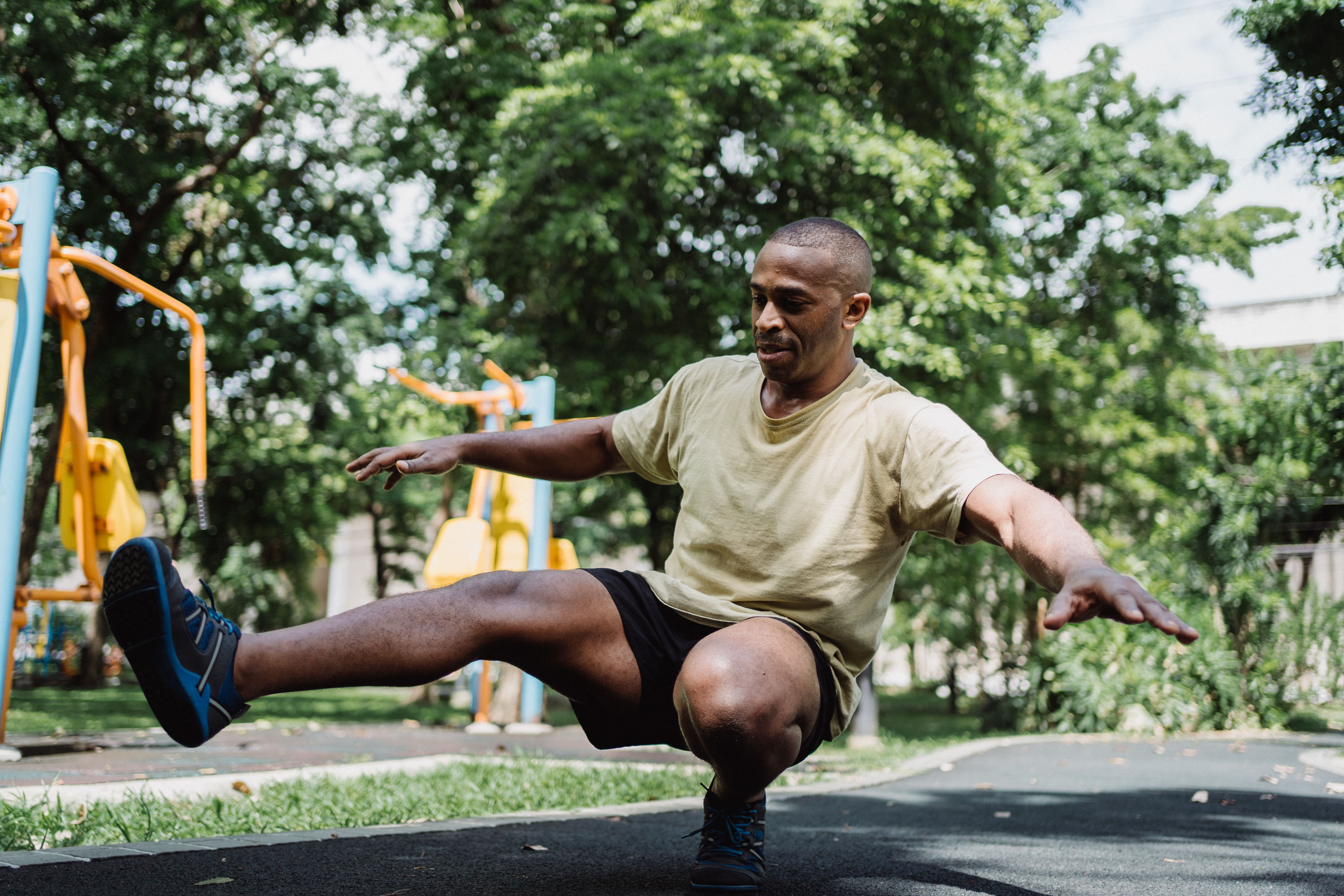
Each task combines different joint positions, speeds, loads, sensory information, and decisions. The shoulder position needed for a tennis serve is not the same as the position needed for a push-up. Hip range during a relaxed stretch is not the same as controlling a lateral lunge or recovering from a wide ball.
Research on mobility programs in athletic populations reflects this complexity. A 2024 systematic review found that varied mobility methods were generally beneficial or did not appear to impair performance, but the 22 included studies used mixed interventions and primarily involved young or junior athletes. The authors called for better-quality research in more consistent populations.
That limitation matters for AEON's audience. Evidence from young athletes can inform thinking, but it cannot establish the best program for every active adult in their 40s, 50s, or beyond. Training still has to start with the person's actual goal, history, current capacity, and response.
A practical mobility framework
Mobility training does not need to become a separate 30-minute ritual. The Minimum Effective Complexity principle is useful here: identify the range that matters, determine what limits its use, and choose the simplest intervention that changes the task.
Define the task. Name the position or activity that matters. “Improve mobility” is vague. Reaching overhead comfortably, rotating for tennis, controlling a deep squat, or getting to the floor and back up gives the program a target.
Separate access from control. If the range is not available, targeted stretching or another range-of-motion exercise may help. If the range is available but difficult to control, the priority may be strength, coordination, tempo, or a simpler version of the task.
Load the useful range. Use resistance that allows consistent positions and an appropriate effort. Gradually expose the person to more range, load, speed, or complexity rather than changing every variable at once.
Retest the task. A mobility drill earns its place when the relevant movement becomes more comfortable, repeatable, or capable. A larger number on an unrelated test may not matter.
Tennis makes the difference visible
Tennis asks the body to access range while producing and absorbing force. A player reaches outside a comfortable base, rotates, brakes, changes direction, and then reorganizes for the next ball. Passive flexibility can contribute, but the player also needs strength, timing, balance, and the ability to use range under pressure.
This is why a mobility plan for tennis may include controlled strength through useful ranges, split-stance work, rotation, lateral movement, deceleration, and eventually more reactive tasks. The goal is not to manufacture a theoretically perfect forehand position. It is to expand the options the player can use without adding unnecessary complexity.
The same principle applies outside sport. Getting down to the floor, climbing a high step, working in a garden, lifting luggage, and moving through a crowded airport all ask for range plus control. The relevant range is the one you can use when the task requires it.
SCREEN / TRAIN / REFER
SCREEN means identifying the task, the available range, the quality of control, symptoms, training history, and what changed. It does not mean treating every asymmetry or feeling of tightness as pathology.
TRAIN means selecting the smallest useful combination of range-of-motion work, progressive strength, balance, coordination, and task practice. Stretching may be included. It simply is not the only option.
REFER means recognizing when a training explanation is insufficient. Persistent pain, neurological symptoms, unexplained loss of motion or function, recent trauma, or other significant red flags warrant assessment by an appropriately qualified health professional.
Mobility is not a contest to create the largest possible range. It is the ability to access enough range for what you want to do, then express strength and control within it.
Selected evidence and guidance
- Optimising the Dose of Static Stretching to Improve FlexibilityIngram et al., Sports Medicine, 2025. Systematic review and meta-analysis of adult static-stretching studies.
- The Influence of Resistance Training on Joint Flexibility in Healthy AdultsFavro et al., Journal of Strength and Conditioning Research, 2025. Systematic review, meta-analysis, and meta-regression.
- Comparison of Resistance Training vs Static Stretching on Flexibility and Maximal Strength in Healthy Physically Active AdultsRosenfeldt et al., European Journal of Applied Physiology, 2024. Randomized controlled trial.
- Application of Mobility Training Methods in Sporting PopulationsSkopal et al., Journal of Sports Sciences, 2024. Systematic review of performance adaptations.
- Practical Recommendations on Stretching ExerciseWarneke et al., Journal of Sport and Health Science, 2025. Delphi consensus statement.